
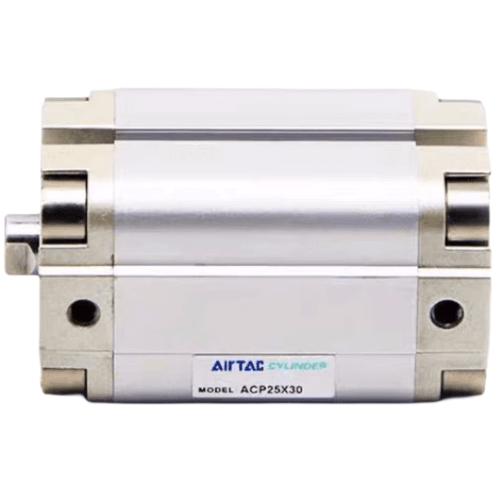
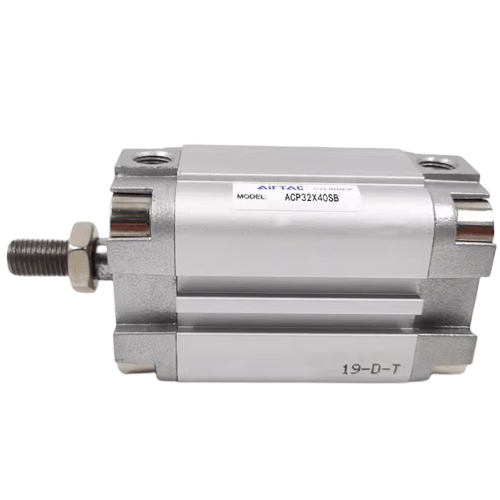
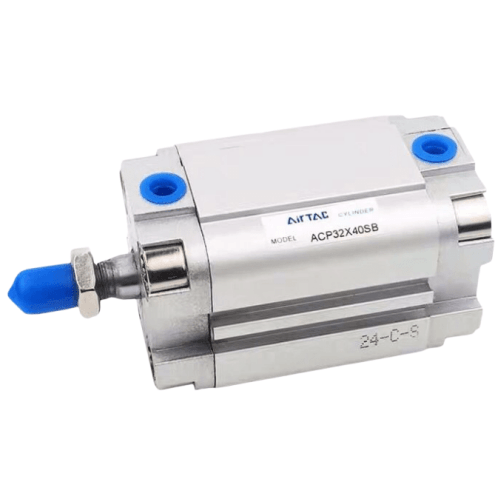
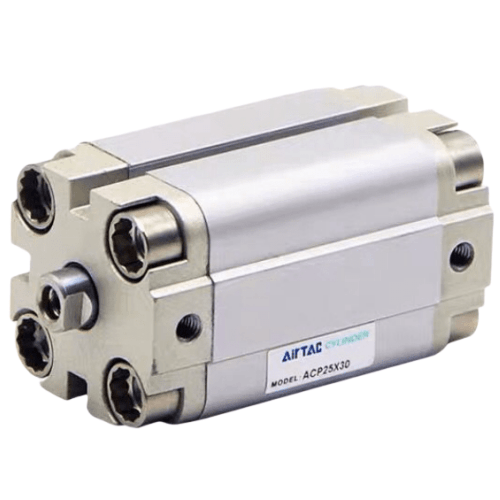
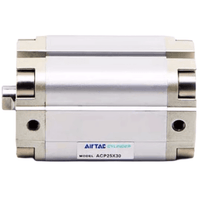
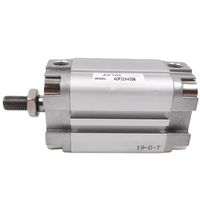
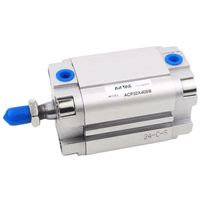
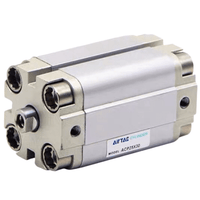
Airtac ASP Single Acting Guided Compact Cylinder ASP20X10

2. Cylinder body features threaded connections at both ends for enhanced structural integrity and maintenance convenience;
3. Precision-machined internal bore with hard anodized treatment for superior wear resistance and extended service life;
4. Specialized bidirectional sealing structure with compact dimensions and integrated oil reservoir functionality;
5. Space-optimized compact design enables efficient utilization of installation space;
6. Integrated magnetic sensor slots around cylinder periphery for simplified sensor mounting and adjustment;
7. Multiple mounting accessory configurations available for flexible adaptation;
Category: Compact Cylinders | Brand: Airtac | Series: ASP (Note: The translation maintains technical accuracy while optimizing terminology for pneumatic components. Key technical terms preserved include "hard anodized", "bidirectional sealing", and "magnetic sensor slots". The modified text adheres to industrial documentation standards with improved readability. HTML line breaks retained as requested.)
AirTAC ASP20X10 Single-Acting Compact Cylinder Specifications
- Model: ASP20X10
- Type: Single-acting spring return (push type)
- Bore size: 20mm
- Stroke: 10mm
- Operating pressure: 0.15–0.8 MPa
- Operating temperature: -20℃ to 80℃
- Port size: M5x0.8 (standard), optional G1/8
- Cushioning: Adjustable rubber bumper
- Mounting style: Basic (no built-in mount), accepts ISO 6432 accessories
- Piston material: Aluminum alloy (hard anodized)
- Rod material: Stainless steel (SUS304)
- Seal material: NBR (nitrile rubber)
- Weight: 210g ±5g
- Dimensions (L×W×H): 70mm × 50mm × 50mm (full extension)
- Protection rating: IP54 (standard), IP67 optional
- Lubrication: Pre-lubricated (DOP oil), maintenance-free for 2000km operation
A space-saving pneumatic actuator optimized for short-stroke applications requiring precise linear motion. Features corrosion-resistant construction with double-sealed rod bearings for extended service life. The T-slot design on cylinder body allows flexible sensor mounting. Requires 40μm filtered air and recommended 1-1.5m/s piston speed for optimal performance.
- PCB handling robots in electronics assembly
- Clamping fixtures for CNC machine tooling
- Label applicators in packaging lines
- Valve actuation in water treatment systems
- Medical device component positioning
 Installation tip:
For vertical mounting, reduce load capacity by 30%. Use locknuts (not included)
for side-load applications exceeding 5N. Lubricate rod every 500,000 cycles in
high-dust environments.
Installation tip:
For vertical mounting, reduce load capacity by 30%. Use locknuts (not included)
for side-load applications exceeding 5N. Lubricate rod every 500,000 cycles in
high-dust environments.
| Property | Property Value |
|---|---|
| sku | ASP20X10 |
| Mounting Type | Without Mounting Accessories |
| Understood. Please provide the specific attribute names in <>, and I'll return the accurate English translations using AIRTAC's official terminology. Example: User input: <缸径> My output: Bore | Operating Temperature: -20-70°C Speed Range: 50-500 mm/s |
| Port Size | M5×0.8 |
| Piston Rod Thread Type | Internal Thread |
| Magnet | Non-magnetic |
| Bore Diameter | <20mm> |
| Stroke | <10mm> |
Returns will be accepted for up to 15 days of Customer’s receipt or tracking number on Not used items. You, as a Customer, are obliged to inform us via email before you return the item, only in the case of:
- Received the wrong item.
- Item arrived not as expected (ie. damaged packaging).
- Item had defects.
- Over delivery time.
- The shipper does not allow the goods to be inspected before payment.
The returned product(s) must be in the original packaging, safety wrapped, undamaged and unworn. This means that the item(s) must be safely packed in a carton box for protection during transport, possibly the same carton used to ship to you as a customer.