
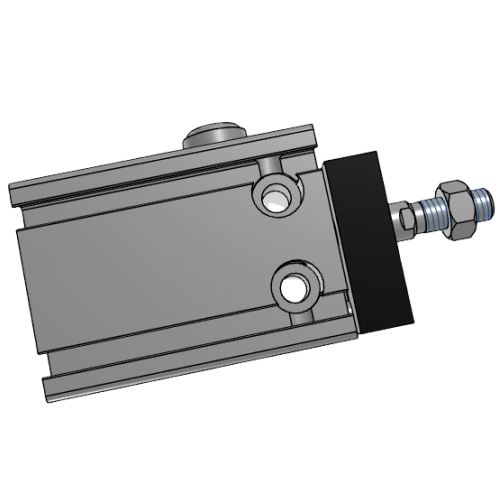
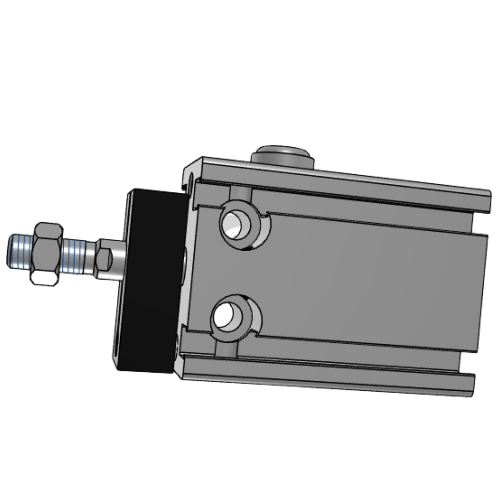
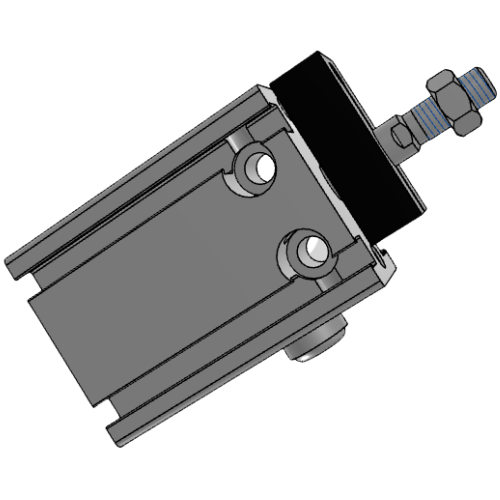
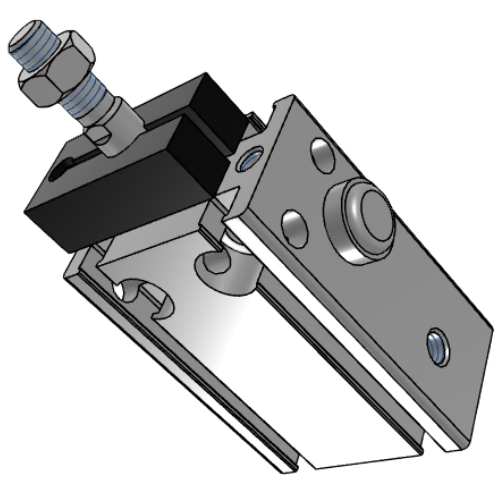
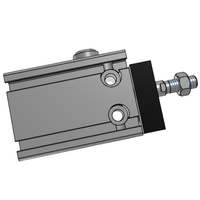
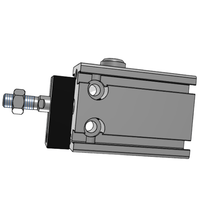
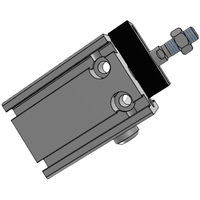
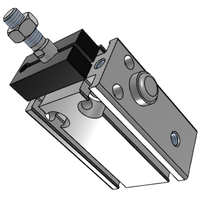
Airtac MSK Multi-position Locking Cylinder MSK16X20

1. Complies with enterprise-standard specifications;
2. Features multiple body mounting configurations for simplified installation and operation;
3. Supports clustered installation of multiple cylinders with space-saving design;
4. High-precision piston rod guidance with maintenance-free lubrication system;
5. Integrated piston rod locking block ensures anti-rotation performance;
6. Comprehensive specifications available for customized pneumatic solutions;
7. Optional high-temperature resistant seals for operational range 0-150°C.
Category: Multi-Position Locking Cylinders | Brand: AirTAC | Series: MSK
AirTAC MSK Multi-Position Locking Cylinder MSK16X20 Technical Details
- Model Code: MSK16X20-S (Standard) / MSK16X20-F (Flanged)
- Bore Size: 16mm (0.63")
- Stroke: 20mm (0.79") ±0.5mm tolerance
- Operating Pressure: 0.05-1.0 MPa (7-145 PSI)
- Locking Force: 120N @ 0.5MPa (71.5 lbf @ 72.5 PSI)
- Temperature Range: -20℃ to 80℃ (-4°F to 176°F)
- Port Size: M5x0.8 (ISO G1/8 optional)
- Buffer Type: Adjustable rubber cushion
- Mounting: ISO 15552 standard
- Rod Material: Hard chrome-plated steel
- Seal Material: NBR + PU hybrid seals
- Weight: 280g (0.62 lbs) without accessories
- Dimensions:
- Length (Cylinder Body): 100mm (3.94")
- Width (Overall): 38mm (1.50")
- Height (With Rod): 145mm (5.71") at full extension
- Cycle Life: 5,000km cumulative stroke distance
- Protection Class: IP54 (standard seals)
This multi-station locking cylinder features mechanical position memory with 5 programmable stop points along its stroke. The dual-piston design enables precise intermediate positioning without external sensors. Its thermal-stable construction maintains ±0.1mm repeatability even under load fluctuations. Includes wear-compensation seals and comes pre-lubricated for 50,000 cycles.
- PCB assembly: Component insertion depth control
- Automated welding: Fixture height adjustment
- Packaging lines: Variable product thickness accommodation
- Semiconductor handling: Multi-level wafer positioning
- CNC tool changers: Sequential arm positioning
 Installation Protocol:
Requires 2-point mechanical alignment during mounting.
Position locking pins must engage before air supply connection.
Recommended maintenance: Relubricate every 200,000 cycles with ISO VG32 pneumatic oil.
Installation Protocol:
Requires 2-point mechanical alignment during mounting.
Position locking pins must engage before air supply connection.
Recommended maintenance: Relubricate every 200,000 cycles with ISO VG32 pneumatic oil.
| Property | Property Value |
|---|---|
| sku | MSK16X20 |
| Understood. Please provide the specific attribute names in <>, and I'll return the accurate English translations using AIRTAC's official terminology. Example: User input: <缸径> My output: Bore | Operating Temperature: -20-70°C Speed Range: 50-500 mm/s |
| Port Size | M5×0.8 |
| Magnet | Non-magnetic |
| Cushion Type | Bumper Pad |
| Bore Diameter | 16mm |
| Stroke | <20mm> |
Returns will be accepted for up to 15 days of Customer’s receipt or tracking number on Not used items. You, as a Customer, are obliged to inform us via email before you return the item, only in the case of:
- Received the wrong item.
- Item arrived not as expected (ie. damaged packaging).
- Item had defects.
- Over delivery time.
- The shipper does not allow the goods to be inspected before payment.
The returned product(s) must be in the original packaging, safety wrapped, undamaged and unworn. This means that the item(s) must be safely packed in a carton box for protection during transport, possibly the same carton used to ship to you as a customer.